Systematic ABG Interpretation
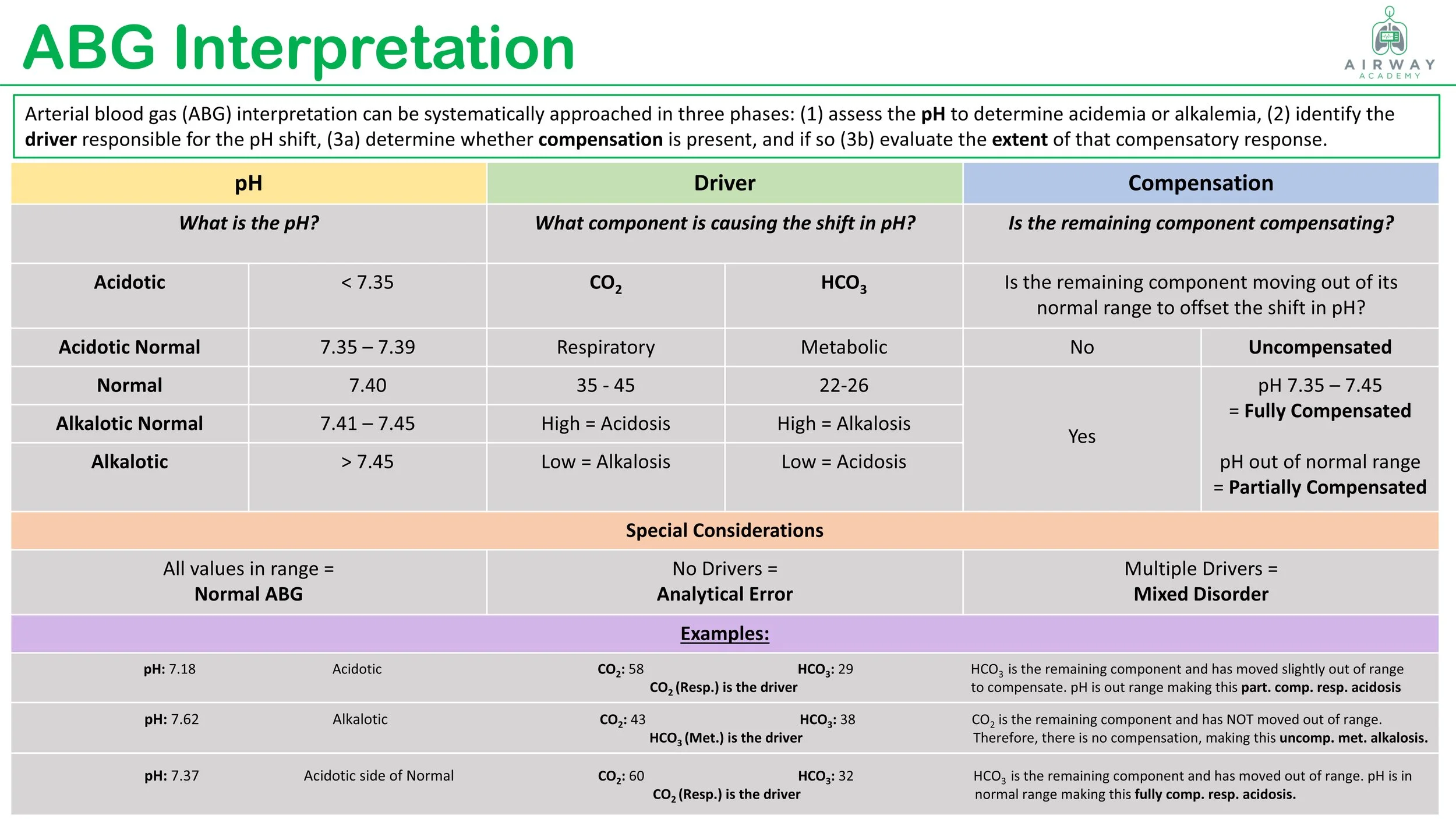
Interpreting ABGs can quickly become chaotic without a clear system. I find it easiest to break it down into three steps:
Determine whether the pH is acidic or alkaline.
Identify what’s driving that change—is it CO2 (respiratory) or HCO3 (metabolic)?
Assess for compensation—and if present, to what extent.
Each step adds another layer of resolution, allowing you to refine your interpretation (for example: acidosis → respiratory acidosis → uncompensated respiratory acidosis).
A solid grasp of normal pH, PaCO₂, and HCO₃⁻ values is essential. Once you’re comfortable understanding how deviations on either side affect pH, the rest becomes surprisingly straightforward.
Hope this framework helps make your ABG interpretations a little cleaner and a lot more confident.
