Trigger PVA: Auto-Triggering
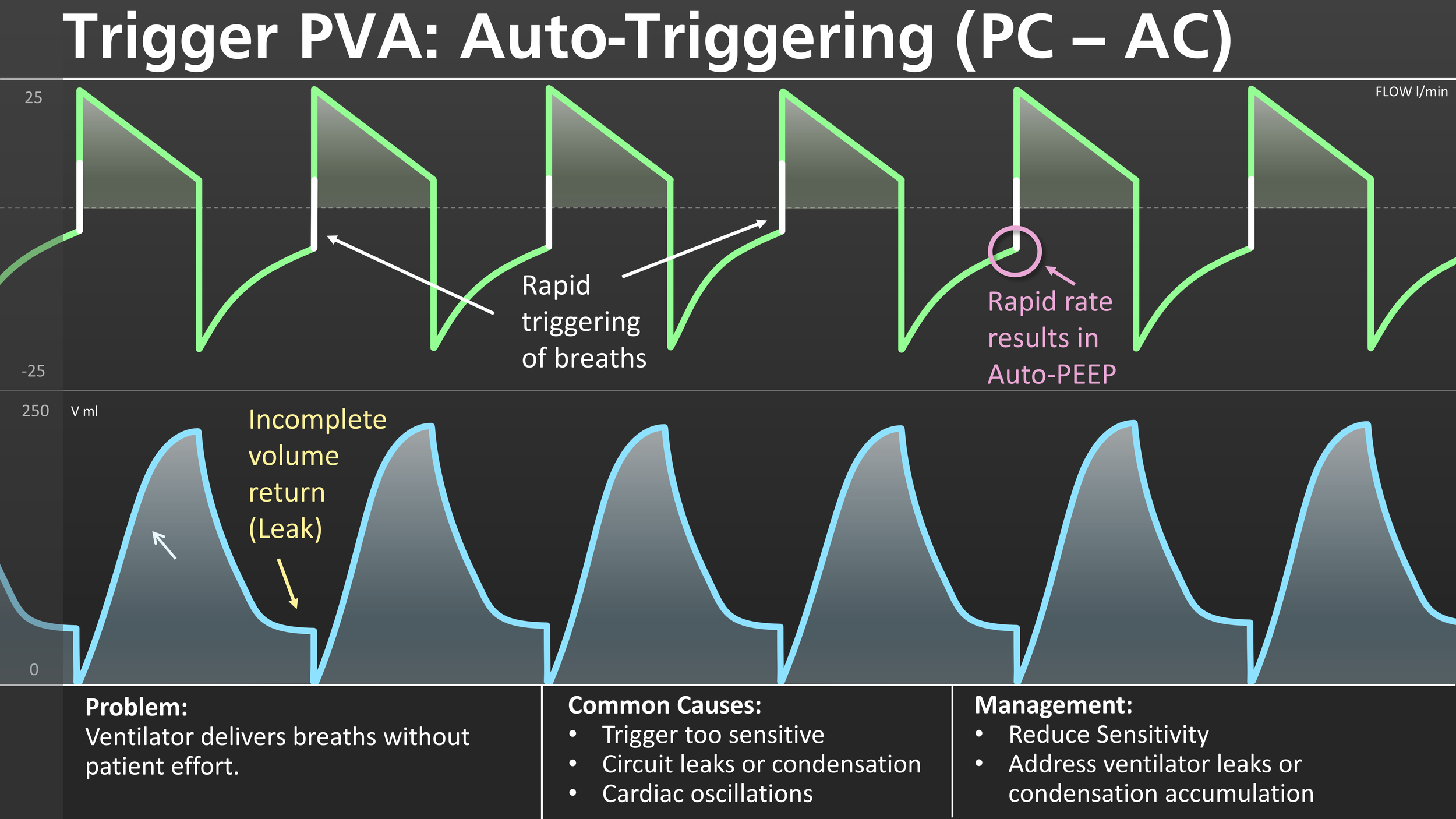
Auto-triggering is a form of patient-ventilator asynchrony (PVA) that occurs when the ventilator delivers breaths without a true patient effort. Auto-triggering occurs when the delivers breaths in response to a false patient trigger. This erroneous patient effort can be caused by numerous factors such as circuit movement, overly sensitive trigger settings, air leaks and condensation. This is most commonly identified on the flow scalar as it will produce a rapid rate and potentially on the volume scalar where leaks may be identified.
Common Causes
Auto-triggering usually occurs when there are factors present that exceed the ventilator's trigger threshold unintentionally. These include:
Excessively sensitive trigger settings
Circuit leaks
Condensation or water in the circuit
Cardiac oscillations (small pressure changes from cardiac activity)
External disturbances (movement, suctioning, or vibration)
Why It Matters
Auto-triggering may lead to overventilation and in severe cases, air trapping (Auto-PEEP). This increases the risk for ventilator-induced lung injury (VILI) due to the inability to exhale fully and the subsequent asynchronies associated with Auto-PEEP. Another important factor to consider is that this may lead to inappropriate titration of the ventilator by the clinician leading to further complications in care.
Management
Decrease trigger sensitivity (make it harder to trigger a breath)
Check for and correct circuit leaks
Drain condensation from ventilator tubing
Adjust trigger type (switch between flow and pressure triggering if appropriate)
Evaluate for cardiac oscillations and adjust sensitivity accordingly
Clinical Pearl:
If the ventilator is delivering rapid breaths that the patient does not seem to be initiating, think auto-triggering and look for sources of false triggering before making any major ventilator changes.
